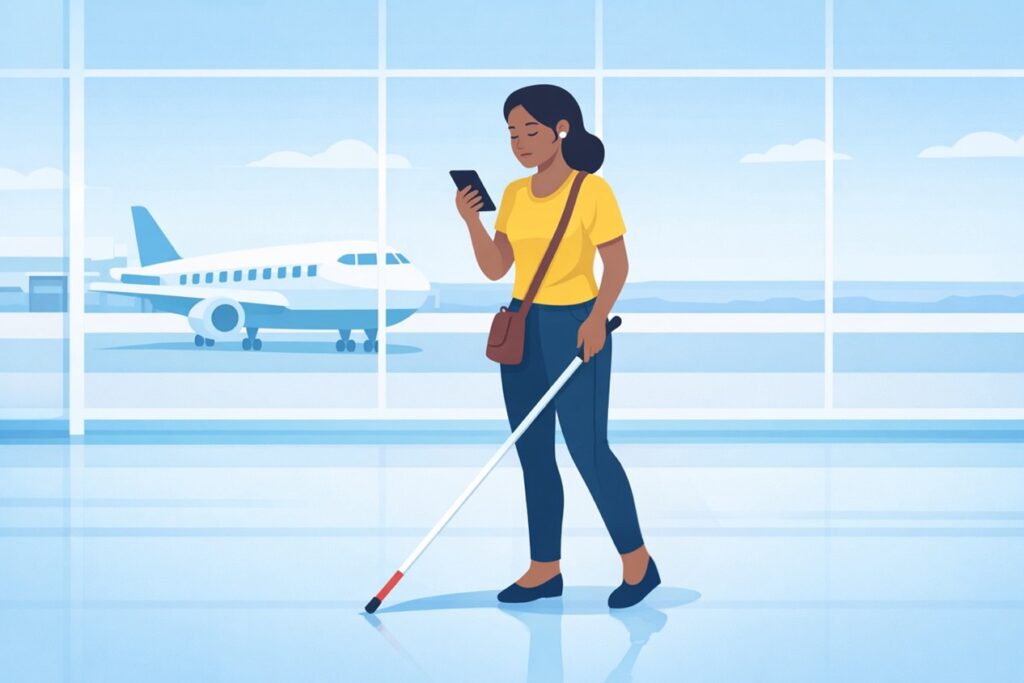
Air travel should be a gateway to opportunity — not a source of stress, uncertainty, or exclusion. Yet the latest European Disability Forum Human Rights Report, “Rights Delayed: Air Travel for Passengers with Disabilities,” makes it clear that millions of disabled passengers still face serious barriers when flying in Europe.
Imagine not knowing whether you will be able to board your flight, have your wheelchair accepted, or reach your destination with dignity. That’s the reality for far too many travellers today. According to the report, nearly seven out of ten people with disabilities feel discriminated against when flying, and the protections that exist in EU law often fail to translate into a smooth, reliable experience.
What’s at the heart of this problem?
Regulation 1107/2006, which should guarantee assistance for passengers with reduced mobility, is applied inconsistently across airlines and airports. Some carriers impose confusing rules on the size or weight of wheelchairs, and others fail to honour assistance requests. Many travellers are simply unaware of their rights because airline and airport information isn’t accessible or clear. NSIOS This isn’t just a matter of compliance. It’s about independence, dignity, and participation. Accessible travel enables employment, family visits, education, and cultural engagement — and when barriers persist, people with disabilities are denied full participation in society.
Imagine not knowing whether you will be able to board your flight, have your wheelchair accepted, or reach your destination with dignity. That’s the reality for far too many travellers today. According to the report, nearly seven out of ten people with disabilities feel discriminated against when flying, and the protections that exist in EU law often fail to translate into a smooth, reliable experience.
What’s at the heart of this problem?
Regulation 1107/2006, which should guarantee assistance for passengers with reduced mobility, is applied inconsistently across airlines and airports. Some carriers impose confusing rules on the size or weight of wheelchairs, and others fail to honour assistance requests. Many travellers are simply unaware of their rights because airline and airport information isn’t accessible or clear. NSIOS This isn’t just a matter of compliance. It’s about independence, dignity, and participation. Accessible travel enables employment, family visits, education, and cultural engagement — and when barriers persist, people with disabilities are denied full participation in society.
Where PoiLabs fits into the solution
Technology can help close these gaps by making travel more predictable, transparent, and user-centred — starting long before passengers reach the airport. At PoiLabs, our indoor navigation, digital twin mapping, and accessible information systems can support disability inclusion at every stage:

Clear, accessible travel guidance: Passenger portals and airport apps that use accessible content and real-time navigation help passengers with disabilities understand layouts, assistance points, and routes before they travel.
Consistent assistance flows: Dynamic indoor navigation can always lead users to assistance desks, elevators, accessible gates, and transport links — reducing confusion and stress in large terminals.
Integration with rights and support systems: By embedding up-to-date rules, assistance request procedures, and passenger rights into mobile navigation tools, travellers can access the right guidance at the right time.
Consistent assistance flows: Dynamic indoor navigation can always lead users to assistance desks, elevators, accessible gates, and transport links — reducing confusion and stress in large terminals.
Integration with rights and support systems: By embedding up-to-date rules, assistance request procedures, and passenger rights into mobile navigation tools, travellers can access the right guidance at the right time.
Accessible air travel must become more than good intentions and patchy implementation. It needs consistent information, predictable environments, and personalised support — all areas where digital navigation and inclusive tech can make an immediate difference.
Moving forward, airlines, airports, and regulators must act together to turn the report’s recommendations into reality. When technology, policy, and human support work together, flying can become a right enjoyed by all — not a challenge for some.
Making Air Travel Truly Accessible for Everyone